Blogs
50,000 Job Opportunities in Japan
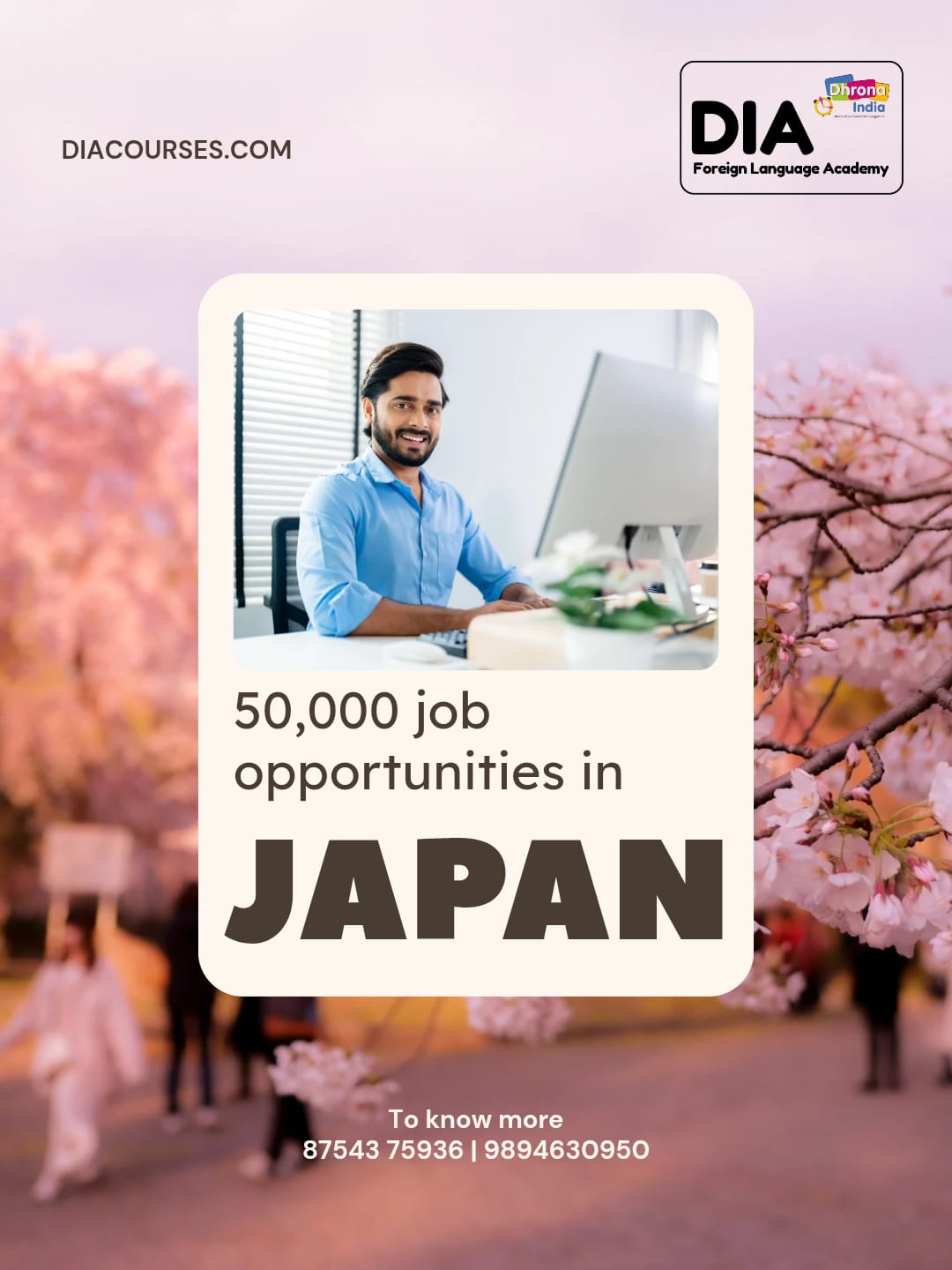
During our Indian Prime Minister's visit to Japan this week, it was agreed with the Japanese government that over the next five years, there will be 500,000 worker and student exchanges, including opportunities for 50,000 Indian professionals in Japan’s workforce.
High-Demand Sectors
- Automobile & Manufacturing
- IT & Electronics
- AI & Robotics
- Healthcare & Skilled Trades
- Startups & Research
- Semiconductor
For students and professionals, learning Japanese adds value by enhancing cultural adaptability and expanding career pathways in Japanese companies.
To know more about the India–Japan Annual Summit Joint Statement on job opportunities, startups, and learning Japanese?
Mail us - learn@diacourses.com
Don’t Just Study Japanese for Certification

Success in Japan comes from understanding how life works there — the flow, respect, and relationships that shape the workplace and community.
Here are a few ways to truly prepare yourself beyond textbooks:
-
Immerse Culturally
Get curious about Japanese food, traditions, and lifestyle. Join local community events, follow Japanese creators, or try small daily habits like bowing greetings or using chopsticks properly. Blending in culturally is just as vital as your technical or language skills. -
Practice Conversational Japanese
Fluency isn’t about grammar perfection , it’s about connection. Practice how you’d actually talk to your neighbors or colleagues. Join our weekly Japanese Chat Room to improve your real-life speaking skills and confidence.
For invites: learn@diacourses.com -
Stay Updated With Japan’s Current Affairs & Startup Scene
Spend time reading or watching Japanese news. Understanding the country’s political climate, tech trends, and policy shifts helps you sound informed and professional , especially during interviews or networking events .
Also, tracking Japan’s startup ecosystem can give you ample leads and insights to apply for roles in growing companies that are often open to global talent. -
Treat Language Learning as a Long-Term Investment
Don’t rush it for the sake of a high-paying job. See it as a lifelong skill that can open doors to richer experiences, deeper friendships, and a more fulfilling career journey. -
Visit Japan and Explore Opportunities
If possible, travel to Japan. Attend trade fairs, business expos, or tech summits. You’ll get a first-hand look at the market, work culture, and the kind of innovation that’s driving Japan’s economy today.
If you’re ready to start your Japanese journey or join our language courses, WhatsApp us at +91 84381 79314 - We’ll help you take the first step.
Visit: www.diacourses.com
Is German Language Mandatory to Get a Tech Job in Germany?

That’s one of the most common questions among students and tech professionals planning a career in Germany.
👉 The honest answer? Yes and No.
❌ No — German isn’t strictly mandatory for all tech jobs. Many global companies and startups in cities like Berlin, Munich, and Frankfurt operate in English and actively hire international talent. So, if your technical skills are strong and your English communication is solid, you can definitely land a job.
✅ Yes — because knowing German widens your opportunities. Many small and mid-sized companies still prefer professionals who can speak the local language. It also helps you collaborate better, integrate into the work culture, and grow faster in your career.
That’s why it’s important to strike a balance build a strong tech foundation while learning German side by side. Only one without the other won’t take you far.
Another common mistake is ignoring English communication skills. Many talented candidates fall short in interviews, not due to lack of knowledge, but because they struggle to express ideas clearly in English the language used for most tech interviews worldwide.
If you’re still in college, this is the best time to start learning German. You’ll have time to prepare at your own pace, unlike once you begin working.
Being fluent in German gives you a clear edge it helps you connect with colleagues, adapt to local culture, and unlock new career paths.
And with Germany becoming more welcoming to Indian professionals, there’s never been a better time to prepare strong tech skills, confident English, and growing German fluency your perfect trio for success in Europe’s tech hub.
💬 Want to know more about current trends in tech recruitment or explore courses to improve your English and German skills? Talk to us at 9894630950 / learn@diacourses.com
Nursing Opportunities in Germany & Japan
As healthcare systems globally face aging populations and staff shortages, Germany and Japan are opening their doors to skilled international nurses and India is emerging as a key talent hub.
In Germany, nurses can expect an initial monthly gross salary of around €2,700 (~₹2.6 lakh), rising to €3,300 (~₹3.2 lakh) after licensure. With specialization (ICU, OT, or geriatrics), pay can exceed €4,000 (~3.5 lakh+).
In Japan, monthly salaries range from ¥227,000 (~1.0 lakh) for fresh nurses to ¥445,000 (~₹2.2 lakh) with 5-10 years of experience.
By comparison, many nurses in India earn ₹20,000-40,000 per month in private hospitals or around 6 lakh per year in government service highlighting the significant global pay gap.
Beyond salary, these nations provide exposure to cutting-edge medical technology, structured work environments, and strong worker protections. Germany's Blue Card program and Japan's Economic Partnership Agreements (EPAs) streamline migration for qualified professionals who complete language and cultural training JLPT N3 for Japan and German B2 for Germany.
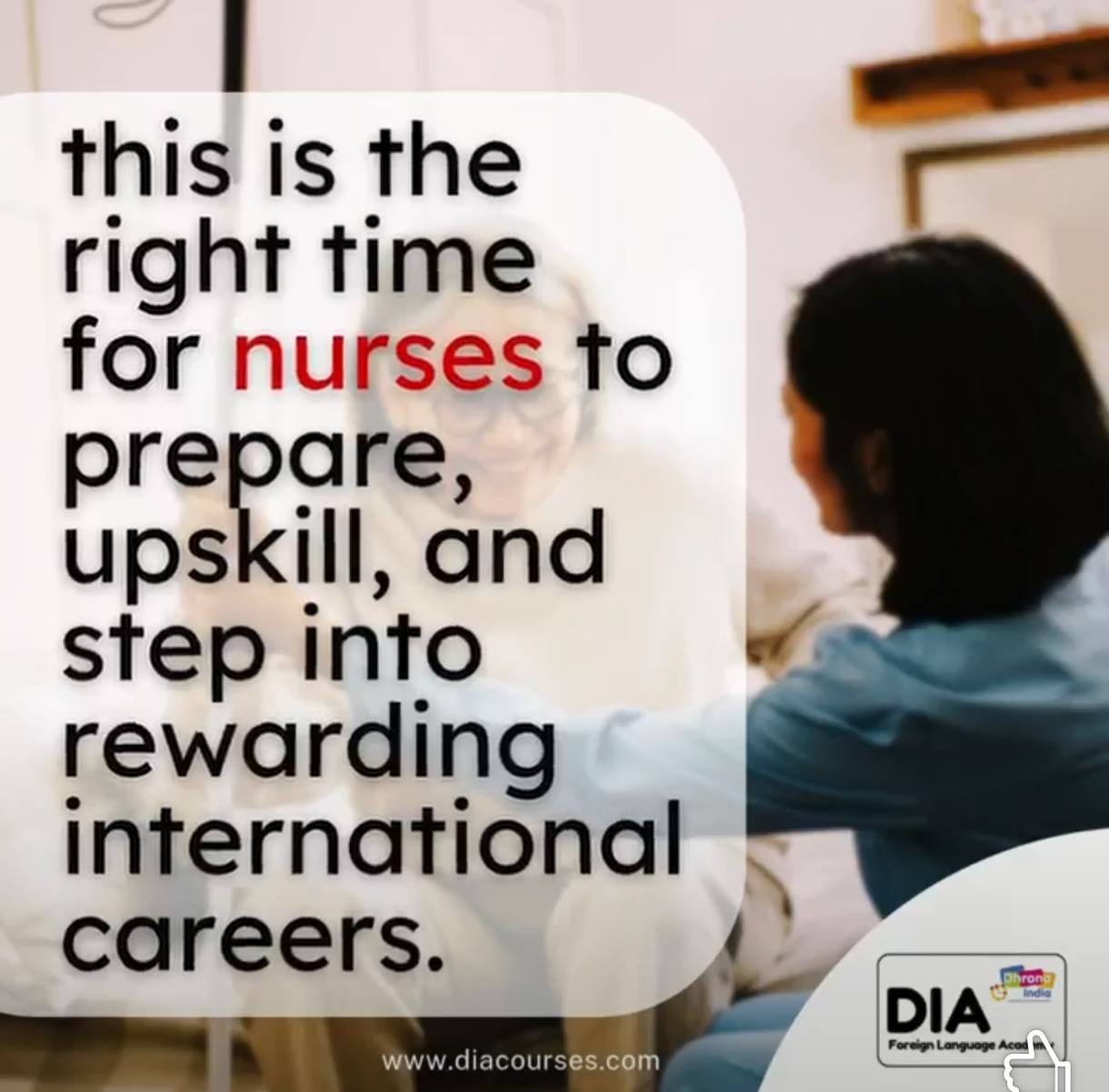
With global demand surging Germany needing 150,000+ nurses by 2025 and Japan facing a shortfall of up to 130,000 nurses this is the right time for Indian nurses to prepare, upskill, and step into rewarding international careers.
Innovation-Driven Progress

True progress happens when curiosity, openness, and creativity are supported not suppressed.
The 2025 Nobel Prize in Economics was awarded to Joel Mokyr, Philippe Aghion, and Peter Howitt for their groundbreaking work explaining innovation-driven economic growth.
Beyond academic theory, they offer valuable lessons for today's students, entrepreneurs, and young professionals navigating a world of constant change.
At both an individual and corporate level, growth can never be automatic. It can pause or even STOP when the environment discourages innovation, blocks change, or fails to nurture new ideas.
Joel Mokyr's research highlights the concept of "creative destruction" the idea that new technologies, products, and methods continuously replace older ones.
Though disruptive, this process is the engine that drives economic and social progress. It reminds us that adaptability and openness to change are the foundations of sustained success.
Philippe Aghion and Peter Howitt, through their model, showed how firms invest in innovation: successful innovators may enjoy temporary advantages, but over time, their breakthroughs are replaced by newer, better ones.
This constant churn is what keeps economies and organizations dynamic, competitive, and future-ready.
For students and young professionals, the take away is to choose the path of Innovation and be in "openness" environment nurturing new ideas that drive growth.
For a country like india economic prosperity will come only when the young gen embrace change to stay relevant in a world shaped by "creative destruction".
Why Skills-Backed Certifications Matter for Working in Germany (2026 & Beyond)

Germany continues to be one of the most attractive destinations for global professionals. A strong economy, skill shortages across industries, and structured immigration pathways make the opportunity real. But here’s the truth many job seekers learn too late:
Germany doesn’t hire potential. It hires proven skills.
If you’re planning to work in Germany in 2026 or beyond, starting your job search without the right certifications and language readiness can cost you months — sometimes years.
Why Skills-Backed Certifications Matter in Germany
German hiring is highly structured, standards-driven, and process-oriented. Recruiters and employers look for evidence that you can perform from Day One, not just academic qualifications.
What German employers value most:
- Industry-recognised certifications aligned to global and European standards
- Practical, application-oriented skills, not theory-heavy learning
- Proof of continuous upskilling, showing relevance in a fast-changing market
- Language readiness — professional English and functional German
Certifications signal serious intent, employability, and low hiring risk.
High-Demand IT Skill Certification
- Google Data Analytics Professional Certificate
- AWS Certified Solutions Architect – Associate
- Microsoft Azure Fundamentals
- SAP ERP Certification
These certifications validate hands-on, enterprise-grade skills widely demanded across German IT firms, consultancies, and multinational enterprises.
Project Management & Agile Skills
- Scrum Master Certification (CSM)
- PRINCE2 Foundation & Practitioner
- PMP – Project Management Professional
Germany’s engineering-driven economy depends heavily on certified project managers, especially in IT, manufacturing, automotive, and construction sectors.
AI, Machine Learning & Future-Ready Skills
- Machine Learning by Stanford (Coursera)
- Deep Learning Specialization – Andrew Ng
- IBM AI Engineering Professional Certificate
- Google AI & Machine Learning Crash Course
Engineering, Automation & Cybersecurity Skills
- AutoCAD Certification
- Festo Didactic Robotics Training
- Certified Ethical Hacker (CEH)
With Germany leading Industry 4.0, professionals combining engineering fundamentals with certified automation or cybersecurity skills gain a clear hiring advantage.
Marketing & Digital Growth Skills
- HubSpot Content Marketing Certification
- Google Ads Search Certification
Digital marketing roles with global exposure are expanding rapidly, particularly in startups, SaaS companies, and international German firms.
Language & Employability Skills
- IELTS / Cambridge English Exams
- Goethe-Zertifikat A2 or B1 (German Language)
While many German roles are English-speaking, basic German (A2/B1) significantly improves job prospects, workplace integration, long-term career growth, and visa outcomes.
In Germany, certifications are not optional add-ons — they are often entry tickets to the hiring process.
Before applying for jobs or visas:
- Upskill intentionally
- Align certifications with your target role
- Combine technical skills + German language ability
To know more, log on to www.diacourses.com
Why Continuous Upskilling Is the Real Job Security in 2026

In 2026, the idea of a “job for life” is officially dead. What replaces it is something far more powerful: the ability to keep learning. If you’re not spending even two hours a week upskilling, you’re not standing still—you’re quietly falling behind.
In today’s dynamic professional landscape, relying only on past experience or existing credentials is no longer enough. Roles are changing faster than job titles, and AI is reshaping expectations across industries. The professionals who stay relevant aren’t the ones with the longest résumés, but the ones who adapt the fastest.
Upskilling is no longer a choice—it’s a mindset. It isn’t about chasing every new trend or collecting certificates for show. It’s about staying effective, confident, and useful in an ever-evolving environment. Whether it’s technology, communication, or language skills, what matters is applying learning in real situations—not just listing it on a profile.
From a language-learning perspective (Diacourses.com), this shift is especially clear. Learning a language today isn’t about memorising vocabulary or clearing exams. It’s about becoming globally capable—able to collaborate, negotiate, and build trust across cultures. These are human skills that technology cannot replace.
The data reinforces this reality. Over 65% of today’s students will work in jobs that don’t yet exist, and professionals who continuously learn are 47% more likely to be promoted and 57% more likely to stay employable long term. Learning—especially through focused, practical upskilling—directly influences career growth.
Microcredentials, short courses, and skill-based learning are no longer optional add-ons—they are tools for survival and growth. But the goal isn’t to brag about how many certificates you hold. The goal is to stay at the forefront of change, ready for what’s next.
In today’s fast-changing business environment, continuous learning is essential. Upskilling keeps us relevant, adaptable, and future-ready. Invest in knowledge—it always pays the best interest.
How Much Does an Engineer Get Paid in Japan?
For many Indian engineers, Japan still carries an outdated image—low salaries, strict language barriers, and limited opportunities for foreigners. The reality in 2026 is very different. Japan is facing a serious tech talent shortage, and skilled engineers who understand how the system works are being paid extremely well.
Mid-level engineers with in-demand skills such as AI, data engineering, cloud platforms, robotics, and semiconductors are commonly earning between ¥7 to ¥10 million per year. Senior engineers and niche experts often go much higher, reaching ¥12 to ¥18 million+, especially in product companies and deep-tech firms. These are not rare cases—they are a direct result of demand far exceeding local supply. (Source: japan-dev.com)
One important truth is that Japan pays for scarce and proven skills, not just degrees or job titles. Engineers who can demonstrate real-world impact—through production systems, architecture decisions, or measurable outcomes—are far more valuable than those who rely only on certifications. Hiring managers and visa sponsors strongly prefer candidates who can show proof of work through GitHub repositories, live projects, and real use cases.
Another common myth is that all tech jobs in Japan require fluent Japanese. In reality, English-only roles do exist, particularly in backend, platform, data, and infrastructure teams. These roles are competitive and usually require five or more years of strong experience, but they are very real. That said, even basic Japanese dramatically improves your chances. Candidates with conversational or intermediate Japanese often experience faster hiring cycles and better salary offers.
Language, in fact, acts as a salary multiplier. Engineers with no Japanese skills tend to average lower compensation, while those with JLPT N3-level proficiency often see salary increases of 30–40%. Beyond compensation, Japanese language skills unlock leadership opportunities, client-facing roles, and long-term career stability in Japan. To understand how easy and structured Japanese learning can be, visit www.diacourses.com.
Visa concerns also stop many Indians unnecessarily. The Engineer/Specialist in Humanities visa is a standard, well-defined pathway for IT professionals. With Japan actively collaborating with India to bring in tens of thousands of skilled engineers, the visa process is no longer the biggest hurdle. Skill relevance, documentation, and employer readiness matter far more than nationality.
The takeaway is simple: Japan does not reward luck—it rewards skills, proof, and commitment. For Indian engineers who prepare strategically, Japan offers not just global exposure, but genuinely high-paying, long-term tech careers.
Can You Stay in Germany Without a Job Offer? Understanding the Opportunity Card

Can you stay in Germany without a job offer? Until recently, the answer was largely no. However, as Germany faces growing skill shortages across key industries, the country has introduced a bold, talent-focused solution — the Opportunity Card (Chancenkarte).
The Opportunity Card marks a major shift in Germany’s immigration approach, making global mobility more flexible, transparent, and aligned with real labour market needs. For skilled professionals who aspire to work in Europe but do not yet have a confirmed job offer, this initiative is truly a game changer.
From Job-Offer Dependency to Skill-Based Access
Traditionally, Germany’s work visa system was heavily dependent on pre-arranged employment. While effective in some cases, this approach limited opportunities for many highly qualified professionals who had strong education and experience but lacked immediate employer sponsorship.
The Opportunity Card changes this model. It allows qualified professionals to enter Germany legally for the purpose of job searching, based on a points-based system rather than a job offer alone.
Merit-Based Evaluation
One of the biggest strengths of the Opportunity Card is its merit-based assessment. Applicants are evaluated on multiple factors, including:
- Educational qualifications
- Professional experience
- Age
- Language skills
- Previous exposure to Germany
This system recognises overall employability instead of tying migration to a single employer, giving professionals greater independence, flexibility, and career control.
The Role of German Language Proficiency
German language proficiency is a key differentiator in both interviews and long-term career success. While some roles may initially operate in English, candidates with strong German skills are far more likely to clear interviews, access a wider range of job opportunities, and integrate quickly into the workplace.
Language proficiency also accelerates career growth, enabling professionals to move faster into leadership roles, client-facing positions, and long-term employment within German organisations. To know more about fast tracking your language learning click www.diacourses.com
Legal Stay While Searching for Employment
Another major advantage is the legal right to stay in Germany while searching for a job. Opportunity Card holders can live in Germany for up to one year and are also allowed to take up part-time work during this period.
This not only helps manage living expenses but also provides valuable exposure to the German work environment, making candidates more attractive to potential employers.
Addressing Germany’s Skill Shortages
Germany’s urgent demand for international talent further highlights the relevance of the Opportunity Card. Significant skill gaps exist across sectors such as:
- IT and software
- Engineering and manufacturing
- Healthcare and caregiving
- Logistics and supply chain
- Skilled trades and technical services
By enabling in-country job search, networking, and interviews, the Opportunity Card directly bridges the gap between global professionals and German employers — something that was previously difficult when applying from abroad.
A Pathway to Long-Term Careers
The Opportunity Card is not just a short-term solution. Once a suitable job is secured, professionals can transition to a regular German work permit or the EU Blue Card, opening the door to long-term employment, social security benefits, and eventually permanent residency.
How to Apply
Eligible professionals can apply for Germany’s Opportunity Card through the German embassy or consulate in their home country. Applications are assessed under a points-based system and require submission of educational qualifications, professional experience details, language credentials, and other supporting documents.
A Forward-Thinking Immigration Model
Germany’s Opportunity Card reflects a modern and pragmatic immigration strategy. It empowers skilled professionals, reduces dependency on employer-led sponsorship, and aligns migration policy with real economic needs.
For global talent seeking growth, stability, and international exposure, the Opportunity Card is not just a visa — it is an opportunity to build a future in one of Europe’s strongest economies.
Why Technically Skilled Indian Professionals Are Increasingly Looking to Japan for Long-Term Careers

— And Why Japan Must Be Ready to Welcome Them Now
Japan stands at a pivotal demographic and economic crossroads. For decades, the country’s growth model relied on a stable, disciplined domestic workforce. Today, that foundation is eroding rapidly. As Japan’s population contracts and its workforce ages, a new reality is emerging: sustaining industry, innovation, and regional economies is no longer possible without foreign talent.
Within this shift, Indian professionals with strong technical skills are emerging as one of Japan’s most strategically aligned talent pools—not by coincidence, but by structural necessity.
Japan’s Demographic Reality Creates a Talent Vacuum
By 2050, Japan’s population is projected to decline to around 100–105 million, down from over 125 million in 2020. More critically, nearly 40% of the population will be aged 65 or above, creating a sharp contraction in the working-age demographic.
For Japanese small and medium enterprises (SMEs)—which make up nearly 99.7% of all firms—this is no longer a future risk but a present constraint. Labor shortages are already driving business closures across manufacturing, construction, caregiving, hospitality, and technology sectors.
This demographic shift is structural and irreversible. Even aggressive domestic reforms cannot reverse the shrinking labor pool. As a result, foreign professionals are transitioning from “supplementary labor” to core workforce contributors.
Why Indian Technical Talent Fits Japan’s Needs
India produces one of the world’s largest cohorts of technically trained professionals every year—engineers, IT specialists, data scientists, electronics experts, and skilled technicians. Many of these professionals are globally mobile, accustomed to structured environments, and eager for long-term career stability rather than short-term contracts.
Japan offers precisely what many Indian professionals seek:
- Long-term employment horizons
- Strong emphasis on quality, process, and craftsmanship
- Advanced manufacturing, robotics, and deep-tech ecosystems
- A stable society with high safety and living standards
Unlike some Western labor markets where immigration is cyclical or politically volatile, Japan’s labor demand is demographically guaranteed for decades. This creates a rare alignment: India has surplus technical talent; Japan has a persistent structural shortage.
SMEs as the Primary Opportunity Engine
While large Japanese corporations receive most international attention, it is SMEs that face the most acute labor shortages—and thus present the greatest opportunity for foreign professionals.
These firms are actively seeking skilled foreign employees, particularly in:
- Manufacturing and production engineering
- Embedded systems, automation, and robotics
- IT services and system maintenance
- Construction technology and infrastructure
- Healthcare support and technical caregiving
For Indian professionals, SMEs offer something often unavailable in large multinational firms: direct responsibility, faster skill accumulation, and long-term integration into company operations.
Japan’s Existing Pathways—and the Urgency to Scale Them
Japan has already created structured entry channels such as the Specified Skilled Worker (SSW) visa framework. However, these systems remain underutilized.
As of 2025, many industries have filled less than half of their allotted foreign worker quotas—not due to lack of demand, but due to procedural complexity, language preparation gaps, and limited employer familiarity.
Now is the optimal moment—before labor shortages reach crisis levels—for Japan to refine these systems and actively engage talent pools like India’s.
Why Indian Professionals Are Choosing Japan Over Other Markets
- Lower saturation of foreign talent compared to Western markets
- Strong respect for technical expertise and seniority
- Opportunities to contribute to legacy industries and long-term projects
- Clear pathways from skilled employment to stable residency
Japan’s emphasis on discipline, continuous improvement (kaizen), and mastery resonates strongly with Indian professionals trained in rigorous technical environments.
The 2025–2035 Window: A Decisive Decade
The next decade represents Japan’s final opportunity to build a sustainable, values-aligned foreign workforce ecosystem.
For Indian professionals, this window offers exceptional first-mover advantage: deeper integration, stronger career trajectories, and long-term stability.
A Convergence of Need and Opportunity
Japan’s labor shortage is permanent. India’s technical talent surplus is enduring.
Indian professionals are not merely “filling gaps”—they are increasingly becoming partners in sustaining Japan’s industrial future.
The question is no longer whether Japan will rely on foreign technical talent, but whether it will do so deliberately and strategically.
We welcome discussions from aspirants who wish to take advantage of the growing supply–demand gap in Japan’s skilled workforce.
To learn more about our certification programs, Kaiwa (spoken Japanese), and Japan career preparation classes, talk to us:
📞 98946 30950 | 🌐 www.diacourses.com
Germany Raises Minimum Wage to €13.90/hour: What It Means for International Students

Germany just raised its minimum wage to €13.90/hour — and that’s big news for international students. 🇩🇪
Starting January 2026, Germany’s minimum wage increased from €12.82 to €13.90 per hour, an 8.4% jump that directly benefits students planning to study and work part-time.
What this means for students:
- Mini-job earnings cap rises to €603/month
- Working the allowed 20 hours/week can earn up to €1,200/month
- Enough to manage rent and basic living costs in most German cities
While Germany’s economy has slowed, demand for skilled talent remains strong. The country still has 800,000+ job vacancies and a skilled worker shortage of 240,000.
Graduate unemployment is just 2.3%, with active hiring in tech, healthcare, and green energy.
That said, hiring priorities have shifted. Employers increasingly value German language proficiency (B1–B2) and candidates who show long-term intent to integrate into the workforce.
With 402,000+ international students already in Germany, an 18-month post-study work visa, low or no tuition at public universities, a €34.80/month semester ticket for unlimited transport—and now higher wages—Germany continues to be one of the most student-friendly destinations in Europe.
The real differentiator?
Language skills.
Students who invest early in German don’t just find part-time jobs faster—they unlock better internships, stronger job offers, and long-term career stability.
If you’re planning to study or work in Germany, start with the language.
👉 Learn more about German language upskilling at www.diacourses.com